
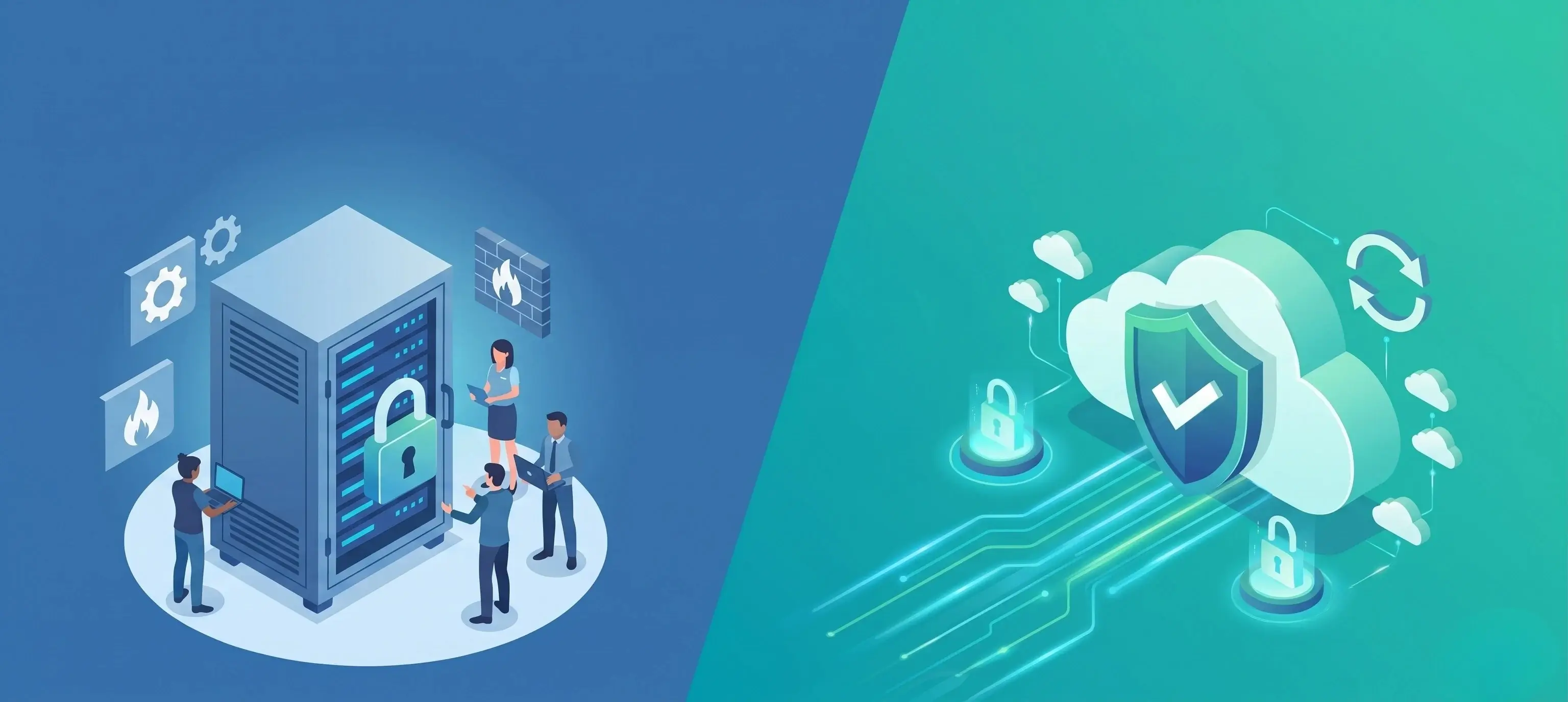
For a long time, keeping data "in-house" was synonymous with security. Your own server, a locked room, total control. With the maturity of the cloud, that equation has changed — and the answer to which model better protects your data has become less obvious than it appears. Let's compare the two honestly.
What each model means in practice
On-Premise is when the software runs on servers owned and maintained by the company itself. SaaS (Software as a Service) is when the application runs on the vendor's infrastructure and you access it via the internet, paying a subscription. The core difference isn't where the data lives — it's who is responsible for protecting it.
The criteria that actually matter
- Security updates: with SaaS, critical patches are applied automatically by the vendor. On-Premise, they depend on your team — and known vulnerabilities stay open until someone updates.
- Backups and recovery: good SaaS providers maintain redundant backups and tested recovery plans. Replicating that internally is expensive and requires dedicated specialists.
- Physical control: On-Premise has an advantage here for companies with specific data sovereignty regulatory requirements.
- Total cost: On-Premise concentrates spending on hardware and staff; SaaS spreads it into a predictable subscription, without maintenance surprises.
The question isn't "where does the data live?" — it's "who has the time, team and processes to protect it every single day?"
Why the cloud has matured
Serious SaaS providers invest in security at a scale most companies couldn't match alone: end-to-end encryption, 24/7 monitoring, compliance certifications and specialized incident response teams. For most growing companies, outsourcing that complexity results in a stronger security posture, not a weaker one.
Before deciding, ask the vendor
Where is data stored? Is there encryption at rest and in transit? What is the backup policy and availability SLA? Is there SSO and an audit trail? The answers reveal real security maturity.
So, which should you choose?
For most SMBs and growing companies, SaaS offers the best balance of security, cost and speed — without needing to build an infrastructure team. On-Premise still makes sense in scenarios with very specific regulatory requirements or environments without reliable connectivity.
When in doubt, evaluate less the technology and more the security commitment of whoever is on the other side. A good SaaS partner makes data protection part of the service — no longer a project that falls back on your team.